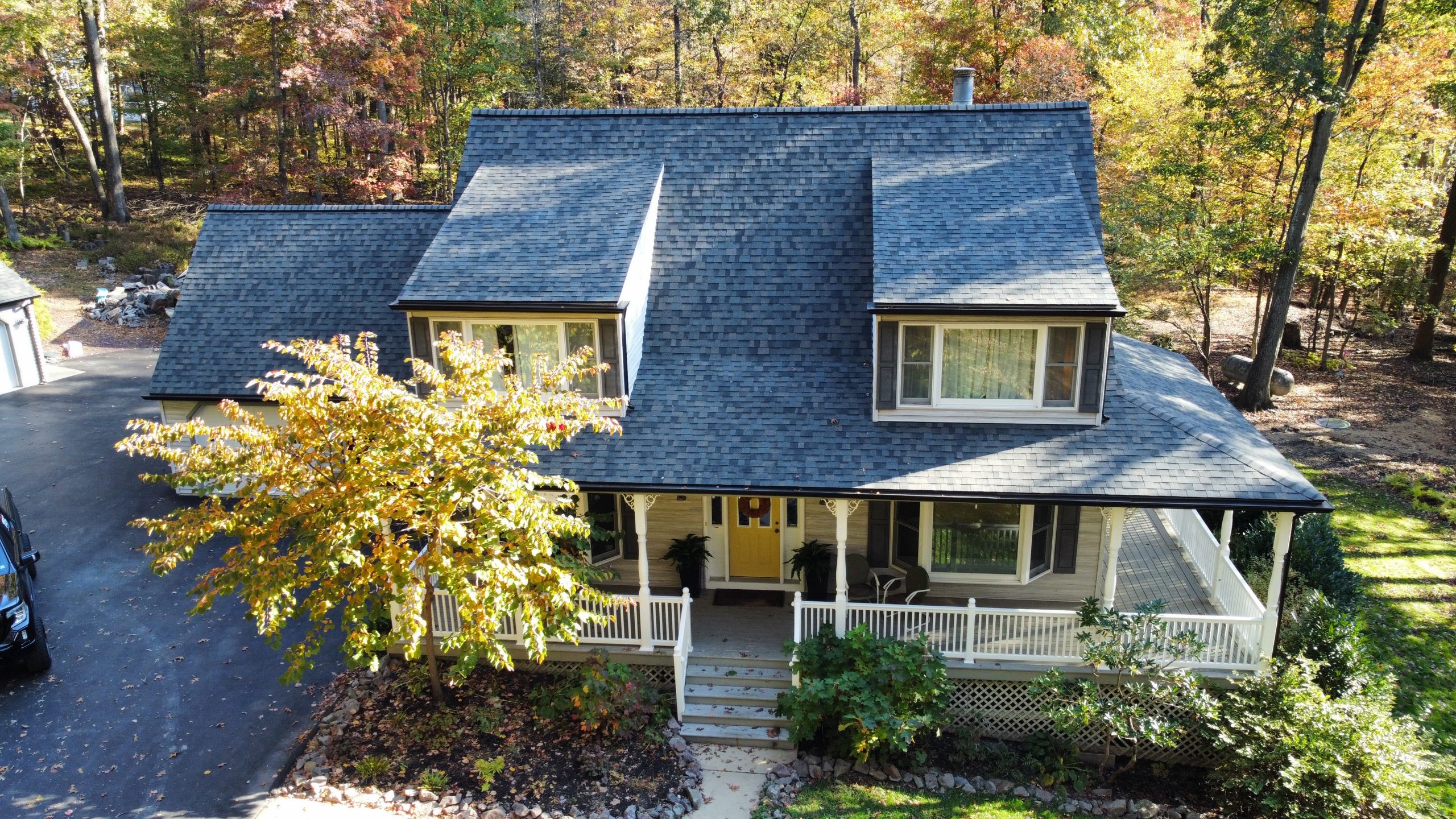
November is one of the best times for a roof inspection in Pennsylvania. Leaves are gone, so the roof is easier to see, and there’s still a window to make repairs before freezing temperatures and snow arrive.
Why Bare Trees Make Inspections Easier
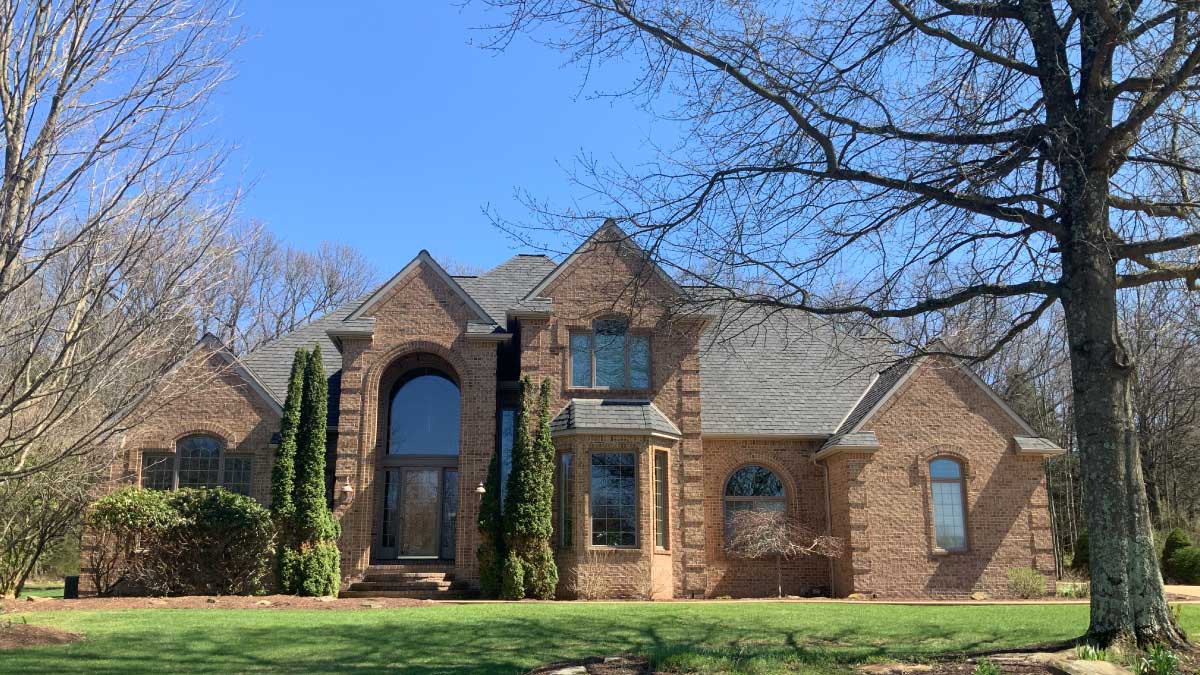
All summer, branches and foliage hide parts of your roof from the ground, and a canopy blocks sightlines that suddenly open up in late fall. Once the leaves drop, you can often spot problems from your yard that were invisible for months. It’s also when damage from spring and summer storms becomes obvious, and when storm damage roof repair is easiest to schedule before winter.
That timing matters. A fall roof inspection gives you a chance to fix small problems while the weather still cooperates, rather than scrambling in January.
What to Look for From the Ground
You don’t need to climb a ladder. Walk the perimeter of your home and look up, ideally with binoculars.
- Missing, cracked, or lifted shingles. Shingles that are curled, buckled, or sitting unevenly may have lost their seal. Wind-driven rain and snow can get underneath them.
- Damaged flashing. Flashing is the metal that seals around chimneys, vents, skylights, and valleys. Look for bent, rusted, or separated sections. Failed flashing is a common source of leaks and one of the most frequent reasons homeowners need roof repair before winter.
- Gutter problems. Sagging gutters, pulled-away sections, and clogs from fallen leaves all matter. Blocked gutters can cause water to back up under the roof edge or form ice dams later, so schedule gutter repair before the first hard freeze.
- Exposed areas. Bare patches where granules have worn away, exposed nails, or visible underlayment mean the roof is no longer protecting what’s below it.
- Storm damage you didn’t notice. Pennsylvania’s spring and summer thunderstorms bring hail, high winds, and falling branches. Damage from events like Central Pennsylvania’s July storm can sit unnoticed under summer foliage until the trees thin out.
- Moss, algae, or debris buildup. Trapped moisture speeds up shingle deterioration, especially on shaded slopes.
Why Small Problems Get Bigger in Winter
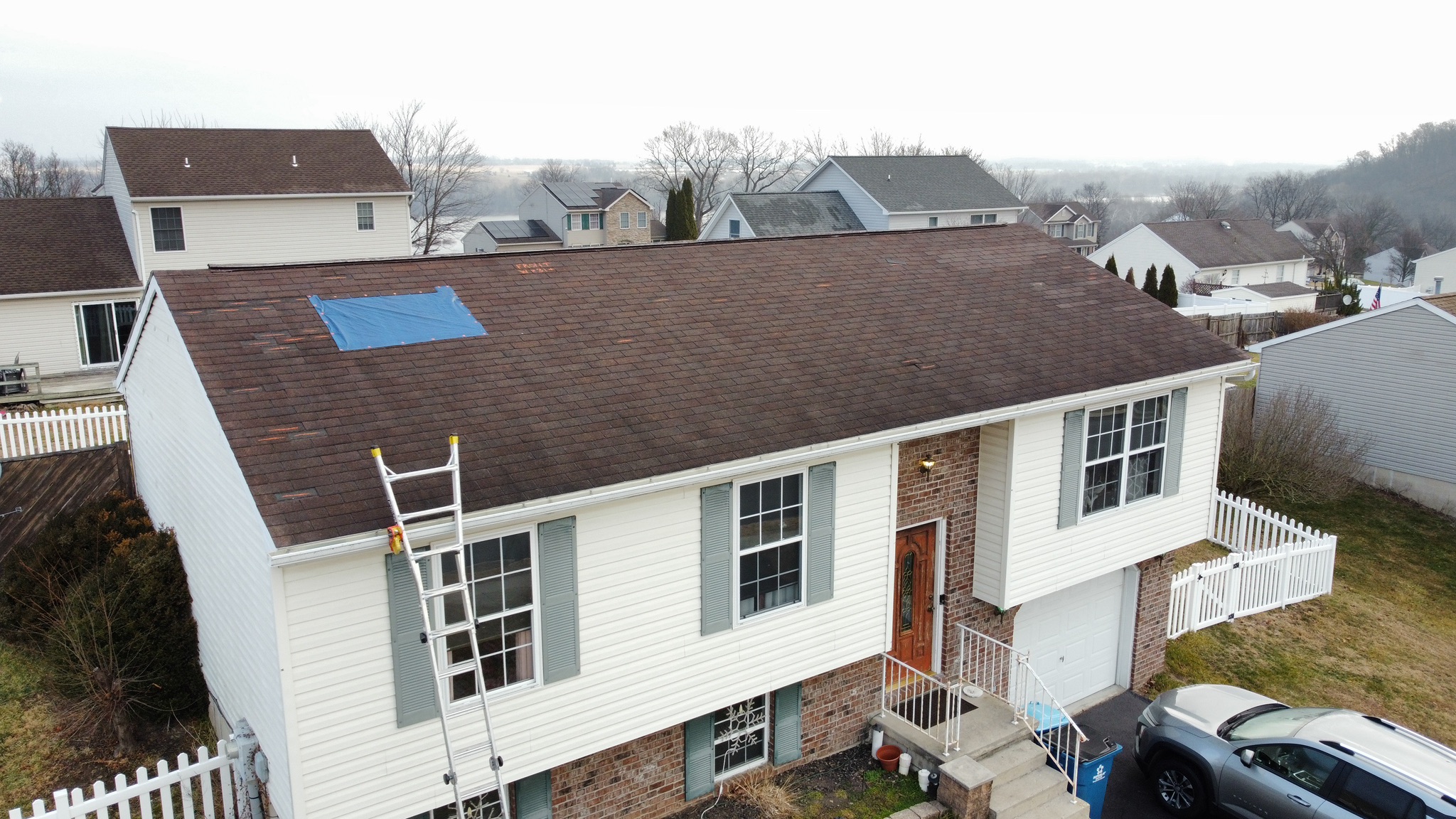
Water is the real culprit. A small gap that lets in a little moisture in October can turn into a major repair by February, because of freeze/thaw cycles.
During a typical Pennsylvania winter, temperatures swing above and below freezing repeatedly. Water seeps into a cracked shingle or a gap in the flashing, then freezes and expands. That pushes the opening wider. When it thaws, more water gets in, and the cycle repeats.
Over time this can lead to:
- Loosened or lifted shingles
- Water reaching the decking and insulation
- Ice dams that force meltwater under shingles
- Interior stains, mold, and damaged ceilings
A repair that would have been minor in November can become a much larger one once moisture has been working on it all winter, sometimes large enough to require a full roof replacement.
Why This Is the Right Time for Winter Roof Preparation
- The weather is still workable. Cooler fall days are generally good for repairs, while deep winter often limits what can be done safely and can turn a small fix into an emergency roof repair.
- Contractor schedules are more open. Demand spikes after the first major storm or leak. (It’s the same reason November is a smart month for roof replacement.)
- You go into winter with confidence. Knowing your roof is sound means fewer surprises when snow loads and ice arrive.
- Documentation helps. If you ever need to file an insurance claim for storm damage, a dated inspection report can be valuable.
What a Professional Roof Inspection Covers
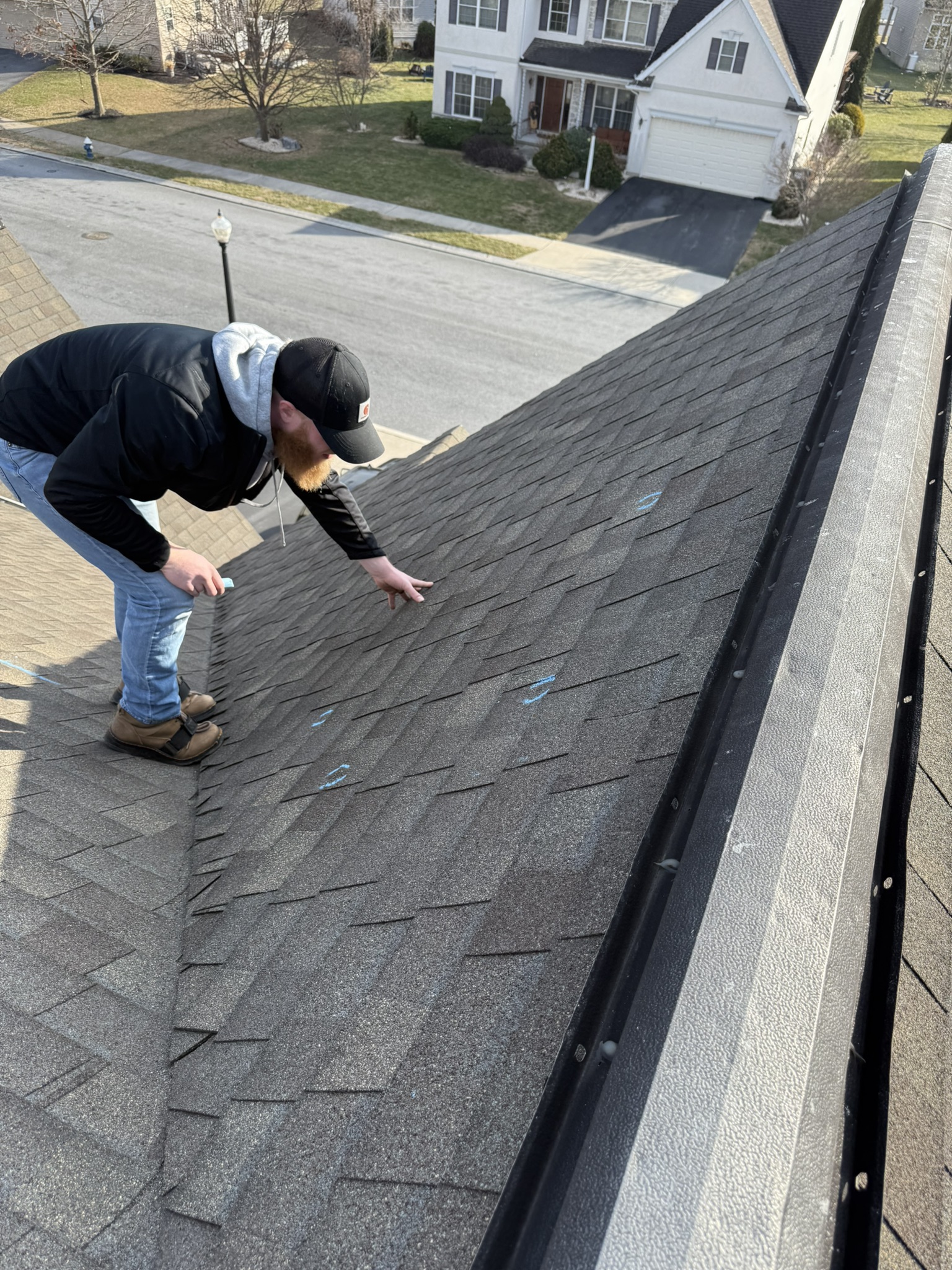
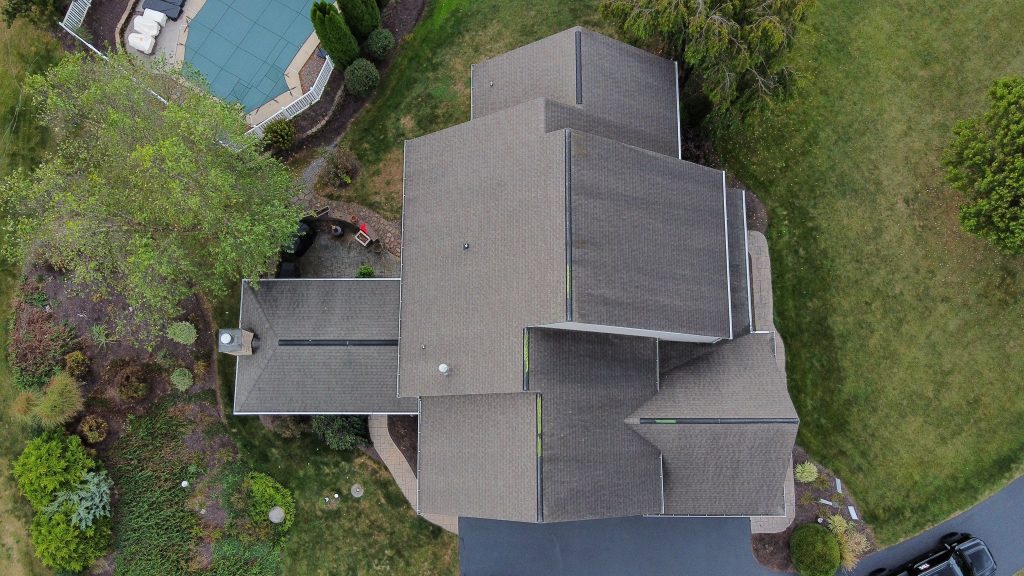
A professional inspection goes well beyond what’s visible from the ground. A thorough one typically includes:
- Shingle condition and signs of wear or storm damage
- Flashing at all penetrations and roof transitions
- Gutters, downspouts, and drainage
- Soffits, fascia, and roof edges
- Attic ventilation and signs of moisture or insulation issues
- A written summary with photos and recommended next steps
Want to keep going once the snow arrives? Our winter roof inspection checklist covers what to watch for through the coldest months.
Frequently Asked Questions
When is the best time for a roof inspection in Pennsylvania?
Late fall, especially November, is ideal. Leaves are down, storm damage from earlier in the year is visible, and repairs can be completed before winter.
How often should I have my roof inspected?
At least once a year, and after any major storm. A fall inspection is a good annual habit, and a post-storm roof inspection catches damage before it spreads.
Can I inspect my roof myself?
You can check for obvious issues from the ground, but a professional can safely identify problems you can’t see, like failed seals, hidden moisture, or flashing damage.
What are the signs I need a roof repair before winter?
Missing or lifted shingles, damaged flashing, clogged or sagging gutters, water stains on ceilings, and daylight visible in the attic are all warning signs.
Do freeze/thaw cycles really damage roofs?
Yes. Water that enters small openings freezes, expands, and widens them, which allows more water in each cycle.
Schedule Your Fall Roof Inspection
Don’t let winter find the weak spots first. If you’ve noticed anything unusual or just want peace of mind, The Exterior Company offers fall roof inspections for homeowners across Pennsylvania. Schedule your free fall roof inspection and head into winter with a roof you can trust. If the inspection turns up repairs, flexible roof financing options can help you get them done before the first freeze.