
If you live in York County or Lancaster County, you don’t need us to tell you it’s been a rough stretch of weather. Between the July 4th windstorm that tore through Lancaster and the confirmed tornado that ripped the roof off Eastern York High School on August 20th, Central Pennsylvania has seen more severe wind events in the last two months than most homeowners see in a decade.
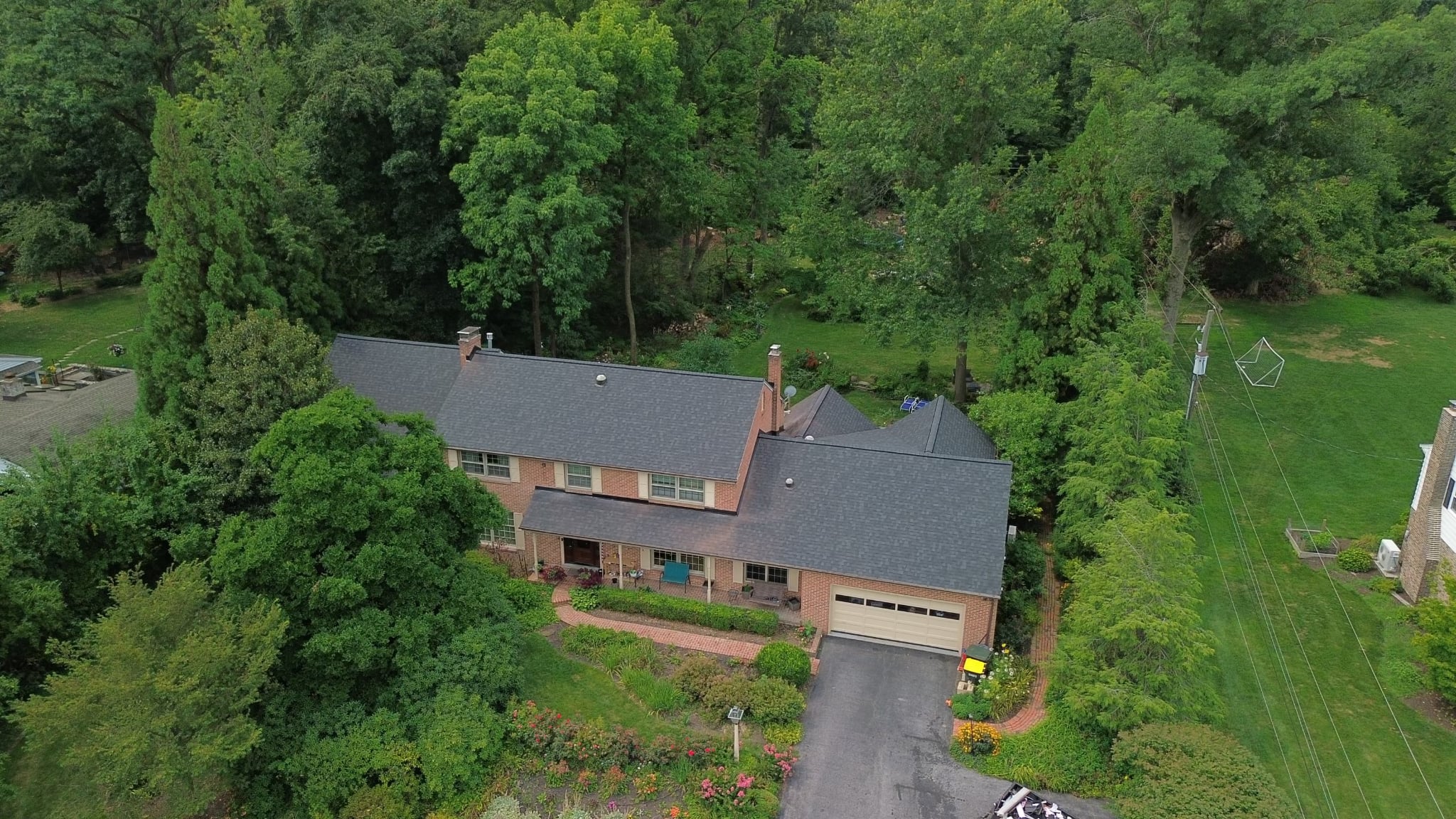
At The Exterior Company, we’ve spent the last several weeks on roofs across York, Lancaster, Wrightsville, Dover, Columbia, Hallam, East Prospect, and Manheim Township, helping homeowners figure out what happens next, from emergency tarping to insurance claims to full roof replacements. If a recent storm left you standing in your yard staring at missing shingles, exposed decking, or torn siding, this guide walks you through everything you need to know.
A Summer Central PA Won’t Forget
July 4th–5th, 2026 — Lancaster County: A powerful storm system moved through Lancaster County over the holiday weekend, downing trees and power lines and cutting electricity to tens of thousands of homes. Manheim Township was among the hardest hit, with thousands of PPL customers losing power, some for days. Homeowners across the county woke up to storm debris, damaged roofs, torn siding, and — in low-lying areas — flooding from the accompanying downpours.
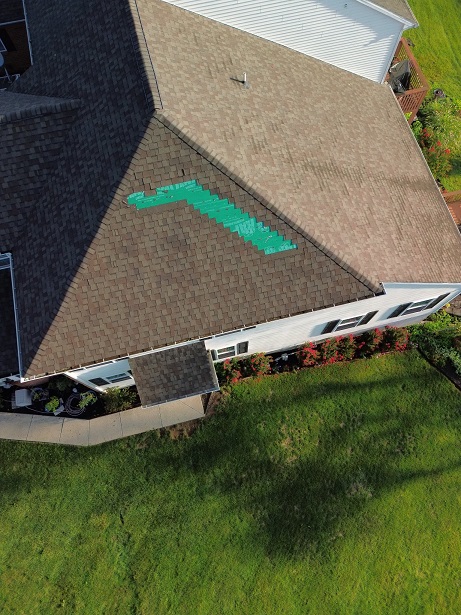
August 20th, 2026 — York County: Just before the first day of school, a tornado touched down south of Wrightsville, cutting a path through Lower Windsor Township. The National Weather Service office in State College confirmed the twister as an EF-2, with peak winds estimated around 120 mph. The most dramatic damage hit Eastern York High School, where part of the auditorium and multiple classroom roofs were torn completely off. Several nearby townhomes and homes were also badly damaged, displacing more than a dozen residents, and storm effects were felt as far as Columbia across the Susquehanna.
For homeowners in the area, it was a stark reminder that Central PA, long considered a relatively low-risk zone for tornadoes, is not immune to them.
Featured: Helping a Wrightsville Homeowner Understand the Damage and Recovery
One of the homes affected by the August 20th tornado belongs to a homeowner we’re currently working with just outside Wrightsville. Her story, and the scope of the damage to her property, was featured by FOX43, which covered the tornado’s path through the neighborhood surrounding Eastern York High School.
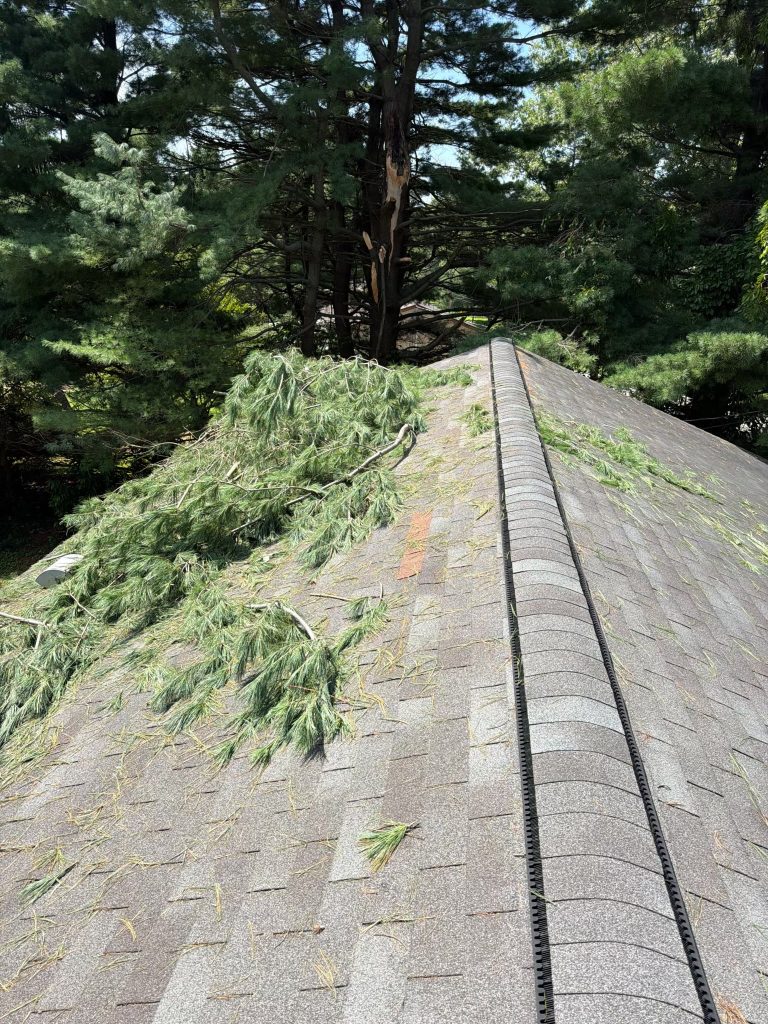
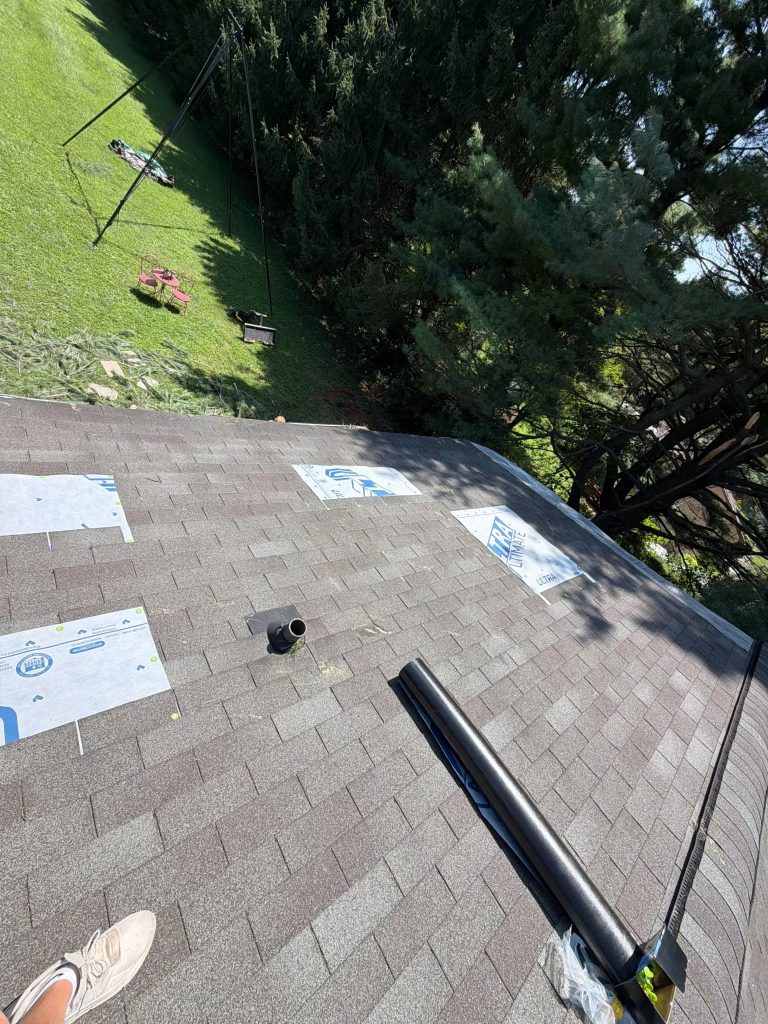
Like a lot of the homeowners we’ve talked to this summer, she didn’t know where to start, whether to call her insurance company first or a roofer first, how to document the damage properly, or how to tell if her roof needed a full replacement versus a repair. We walked her through each step, and we’re sharing that same roadmap with you below.
Wind Damage 101: What Actually Happens to a Roof in a Storm
“Wind damage” isn’t just missing shingles. Depending on wind speed and the angle of the gusts, a severe storm can cause:
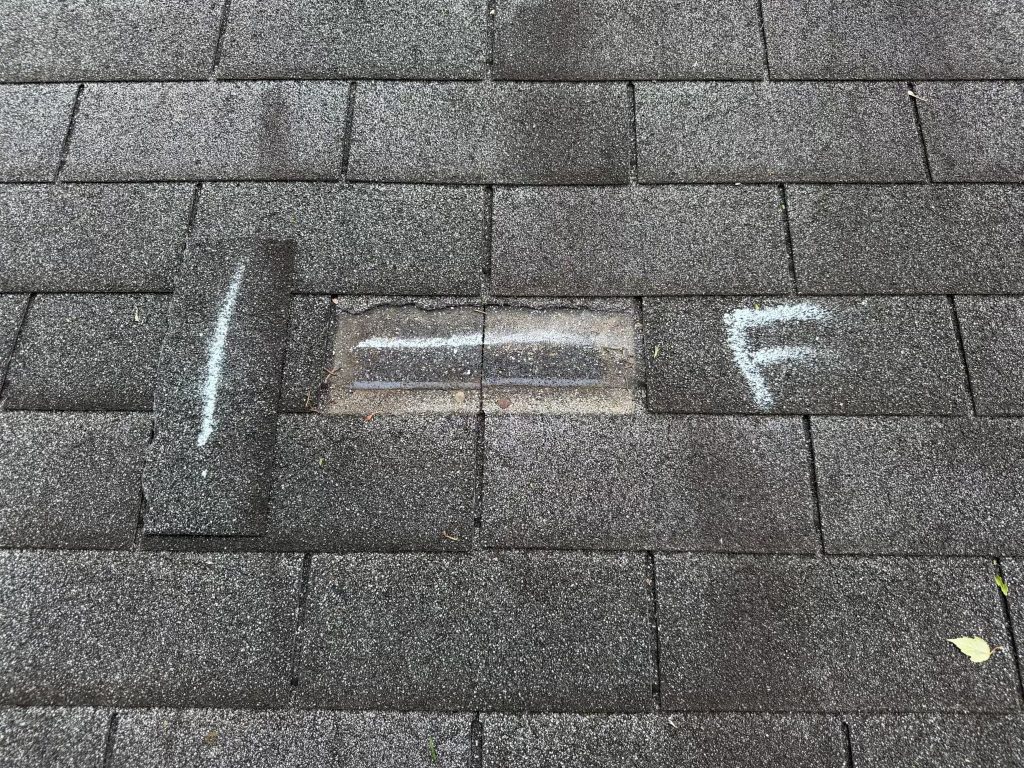
- Shingle lifting, creasing, or loss — wind gets underneath the shingle tab and breaks the seal, which is often invisible from the ground but leaves your roof vulnerable to water intrusion.
- Exposed or torn decking — in the worst cases (like the EF-2 in Wrightsville), entire sections of roof sheathing can be ripped away.
- Damaged flashing and vents — the metal around chimneys, skylights, and roof penetrations is one of the first things to fail in high winds.
- Torn or dented siding — flying debris and direct wind pressure often damage siding at the same time as the roof.
- Gutter and downspout separation — wind can pull gutters away from the fascia, which then causes water to pool near your foundation.
- Hidden leaks — some of the most costly damage isn’t visible until weeks later, when water staining shows up on ceilings or in the attic.
Signs Your Roof Has Wind Damage
If you’re in York, Dover, Lancaster, Wrightsville, Columbia, or anywhere in Central PA and rode out either storm, walk your property (safely, from the ground) and look for:
- Shingles in the yard, gutters, or against your foundation
- Bald or discolored patches on the roof where granules have worn off
- Lifted or curling shingle edges
- Visible daylight in the attic
- New water stains on ceilings or walls
- Bent, missing, or misaligned gutters
- Dented or cracked vinyl/aluminum siding
If you see any of these, it’s worth a professional inspection even if the damage looks minor because small vulnerabilities become expensive leaks fast, especially with more storms in the forecast.
What To Do Right After the Storm
- Stay safe first. Downed power lines, unstable trees, and weakened roof structures are not worth the risk. Leave anything involving electrical hazards to the professionals.
- Document everything. Take photos and video of the roof, siding, gutters, and any interior damage (ceiling stains, attic leaks) before any cleanup or repairs happen.
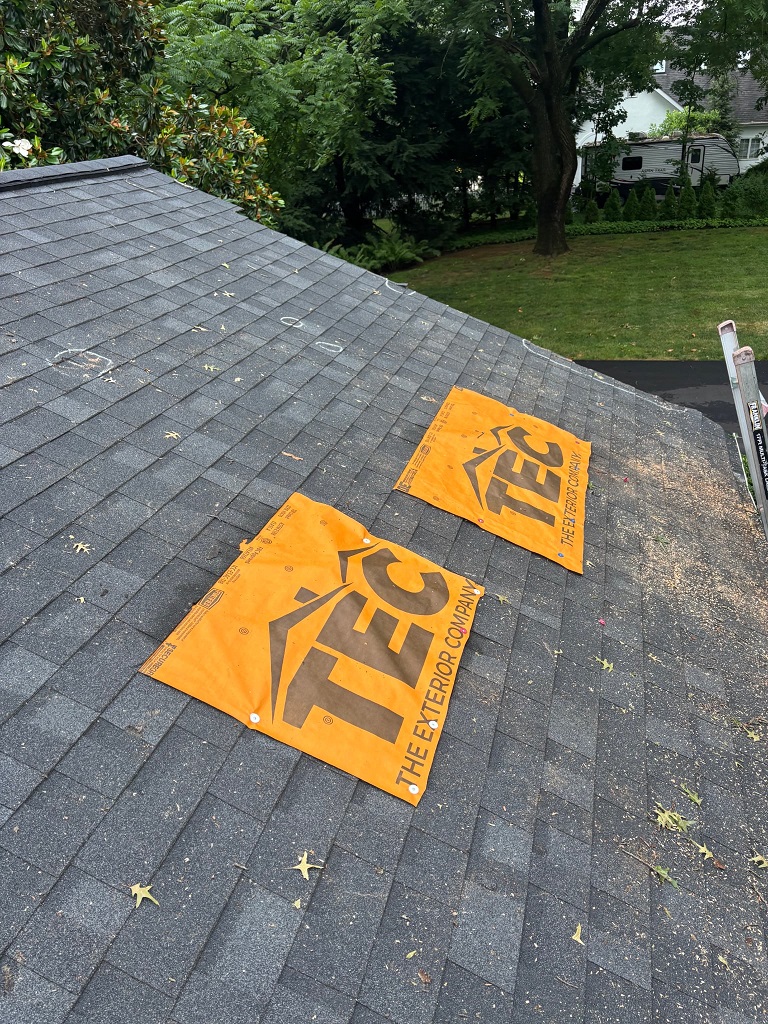
- Get a tarp on it. A temporary tarp prevents a bad situation from becoming a much worse (and much more expensive) one. Most insurance policies expect you to take reasonable steps to prevent further damage.
- Call a local roofer for a free inspection before you call your insurance company — or at least before you agree to any settlement. An experienced local roofer can tell you what’s actually storm-related damage versus wear and tear, and can provide documentation that strengthens your claim.
- Keep every receipt related to emergency repairs, tarping, or temporary lodging if your home is uninhabitable.
The Insurance Side: What Central PA Homeowners Need to Know
This is the part that trips most people up, and it’s where we spend a lot of our time with homeowners. A few things worth understanding before you file:
Wind and tornado damage is typically covered. Most standard homeowners insurance policies in Pennsylvania cover sudden, accidental damage from wind, hail, and tornadoes under your dwelling coverage. What’s usually not covered is damage from long-term neglect, wear and tear, or lack of maintenance, which is exactly why documentation matters so much.
Check whether you have a separate wind/hail deductible. Some PA policies carry a percentage-based wind or storm deductible (often 1–5% of your home’s insured value) rather than a flat dollar amount. That can significantly change your out-of-pocket cost, so it’s worth pulling your declarations page and reading the fine print or asking your roofer to help you understand it.
Know the difference between ACV and RCV. Actual Cash Value (ACV) policies pay out the depreciated value of your roof, while Replacement Cost Value (RCV) policies cover the cost to replace it with new materials, minus your deductible. If your roof is older, this distinction can mean a difference of thousands of dollars.
Get an independent inspection before the adjuster visits, if you can. Insurance adjusters are working for the insurance company. Having your own roofer’s documentation which includes photos, measurements, and a written scope of damage which gives you leverage if the initial settlement offer doesn’t reflect the real cost of repair.
Don’t miss filing deadlines. Pennsylvania policies vary, but many carriers set deadlines (sometimes as short as 12 months) for filing a claim tied to a specific storm date. If you’re still deciding whether damage is “bad enough” to claim, don’t wait too long to at least get it documented.
Ask about supplementing your claim. If your roofer identifies additional damage once the roof is opened up (like rotted decking hidden under shingles), you can often submit a supplement to your existing claim rather than paying for it yourself.
Repair, Partial Replacement, or Full Roof Replacement?
Not every storm-damaged roof needs to be torn off and replaced. As a general rule of thumb:
- Isolated wind damage (a section of missing shingles, one damaged slope) is often a straightforward repair.
- Damage spread across the whole roof, or a roof that was already near the end of its lifespan before the storm, usually makes more financial sense as a full replacement, especially once insurance is covering most of the cost.
- Structural damage — torn decking, compromised trusses, or damage like what we saw at Eastern York High School, requires a full replacement and, in some cases, engineering input.
A trustworthy roofer will tell you honestly which category your roof falls into rather than upselling you on a full replacement you don’t need and will also tell you when a repair is genuinely not enough to protect your home long-term.
Getting the Best Price Without Cutting Corners
For homeowners paying partially or fully out of pocket, a few tips we give every customer:
- Get at least two or three quotes, and make sure each one is scoped the same way (same materials, same square footage, same warranty terms) so you’re comparing apples to apples.
- Ask about manufacturer and workmanship warranties separately. A cheap quote with a short warranty can cost more in the long run.
- Bundle repairs when it makes sense. If your siding and gutters were also damaged, addressing them in the same project often saves on labor and scaffolding/equipment costs versus separate visits.
- Ask if your roofer is licensed, insured, and local. Storm season brings traveling contractors (“storm chasers”) into Central PA who disappear once the check clears. A local company with a permanent presence in York or Lancaster County is accountable long after the job is done.
Serving Homeowners Across York & Lancaster Counties
TEC has been on the ground throughout this storm season helping homeowners across:
- York and York County (including Wrightsville, Dover, Hallam, East Prospect, and Lower Windsor Township)
- Lancaster and Lancaster County (including Columbia, Manheim Township, and surrounding boroughs)
Whether you’re dealing with a few missing shingles from the July 4th storm or major structural damage from the August 20th tornado, our team can provide a free roof inspection, help you understand your insurance options, and give you an honest recommendation to repair or replace.
Ready for a Free Inspection?
If your roof, siding, or gutters were affected by this summer’s storms, don’t wait for a small problem to become a big one. Contact TEC today for a free storm damage inspection and let our local team help you navigate the road back to a fully protected home.
Sources: National Weather Service (State College), FOX43 WPMT, LNP | LancasterOnline, ABC27, Local21 News, and the Insurance Information Institute. This article is for general informational purposes and is not a substitute for advice from your insurance company or a licensed public adjuster regarding your specific policy.