
Why Cold Weather in the Northeast Makes Them Worse
Connecticut winters are known for heavy snow, long cold stretches, and frequent freeze–thaw
cycles. While this weather is part of life in the Northeast, it also creates ideal conditions for ice
dams, one of the most common and costly causes of winter roof damage.
At The Exterior Company (TEC), we see ice-dam issues every winter across Connecticut. In
many cases, the damage starts quietly and goes unnoticed until spring. This guide explains
what ice dams are, why they’re so common in our region, what risks they pose to your home,
and how to address them properly.
What Is an Ice Dam?
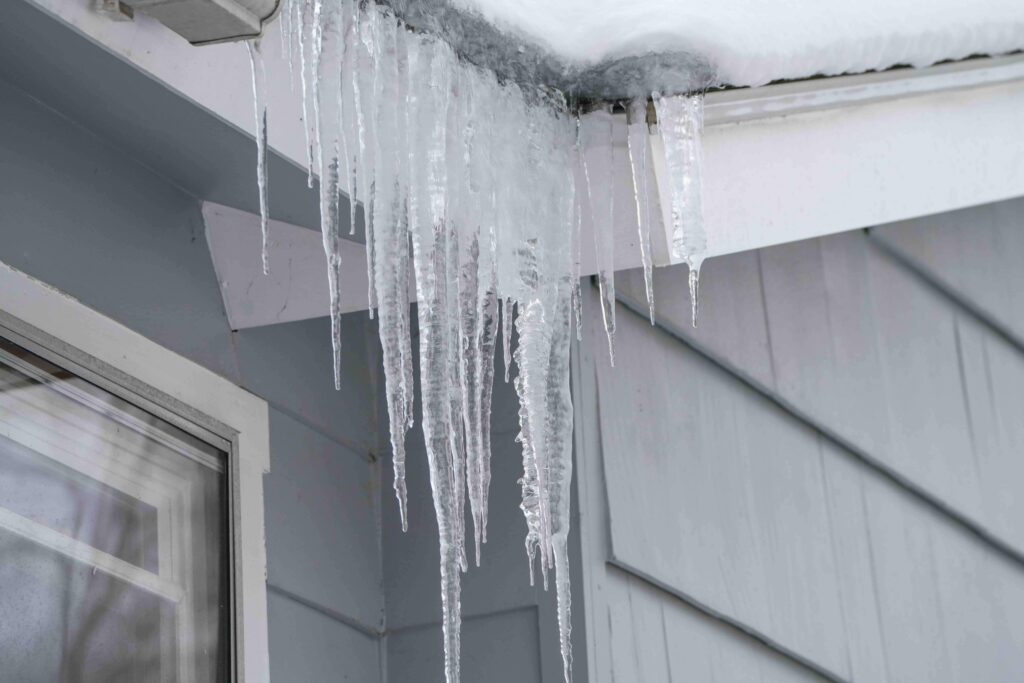
An ice dam is a ridge of ice that forms along the lower edge of a roof, typically near the gutters.
It develops when snow melts on warmer sections of the roof and then refreezes at colder roof
edges.
As this ice builds up, it prevents melting snow from draining off the roof. The trapped water has
nowhere to go and can back up underneath shingles, where it enters the roofing system and
eventually the home itself.
Ice dams are not simply a cosmetic issue. They are a sign that heat and moisture are moving
through your home in unintended ways.
Why Ice Dams Are So Common in Connecticut and the
Northeast
Ice dams occur throughout cold climates, but homes in Connecticut and the greater Northeast
face an elevated risk due to several regional factors.
First, extended periods of freezing temperatures keep roof edges cold for long stretches of time.
Once ice forms, it tends to remain in place rather than melting away quickly.
Second, Connecticut winters often involve freeze–thaw cycles. Snow melts during warmer
daytime hours and refreezes overnight, accelerating ice buildup along the roofline.
Third, many homes in the region were built before modern insulation and ventilation standards
were widely adopted. Even well-maintained homes may allow warm air to escape into the attic,
warming the roof surface unevenly.
Finally, Northeast snow is typically heavier and wetter than snow in other regions. This added
moisture increases the amount of meltwater available to refreeze and form ice dams.
How Ice Dams Form
Ice dams form due to uneven temperatures across the roof surface. The process generally
follows this sequence:
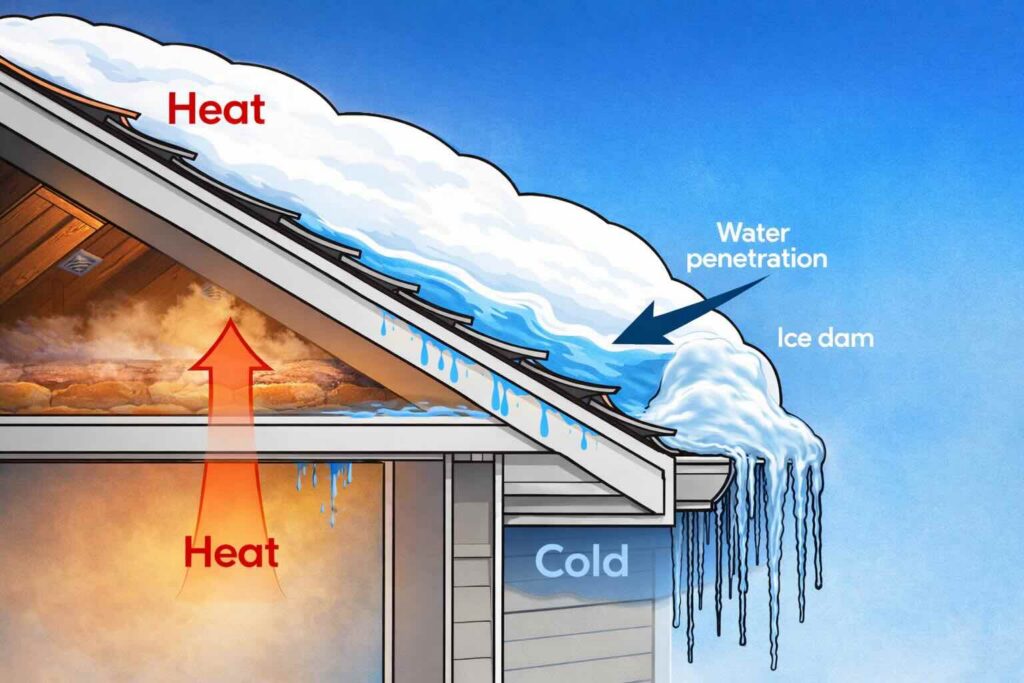
Heat from the living space rises and escapes into the attic. This heat warms the upper portion of
the roof, causing snow to melt. The melted snow flows downward toward the eaves, where the
roof surface is colder because it extends beyond the heated portion of the home. When the
water reaches this colder area, it refreezes and forms ice. Over time, this ice builds into a dam
that blocks additional meltwater. Water trapped behind the ice is forced back up under shingles
and into the roof structure.
Because of this process, ice dams are rarely caused by the shingles alone. They are typically
the result of insulation, air sealing, and ventilation issues inside the home.
What Kind of Damage Can Ice Dams Cause?
Ice dams can lead to a wide range of damage, some of which may not be immediately visible.
Water can seep beneath shingles and into the roof decking, leading to rot and structural
deterioration. Moisture can saturate attic insulation, reducing its effectiveness and increasing
heating costs. As water continues to travel, it may stain ceilings and walls or create conditions
for mold and mildew growth.
Ice buildup can also damage exterior components such as gutters, fascia, and soffits. In severe
cases, the weight of ice can cause gutters to pull away from the home.
Because this damage often occurs slowly and out of sight, homeowners may not realize there is
a problem until repairs become more extensive.
What Not to Do When You See Ice Dams
When ice dams appear, it’s natural to want to remove them quickly. However, certain actions can cause more harm than good.
- Chipping or hammering ice can damage shingles, flashing, and the roof surface.
- Using rock salt or sodium chloride can corrode roofing materials and harm landscaping.
- Climbing onto an icy roof or ladder poses serious safety risks.
- Ignoring the issue until warmer weather arrives can allow hidden water damage to worsen over time.
Temporary measures may reduce visible ice, but they do not address the underlying cause.
What to Do If You Have Ice Dams
If ice dams are present, the immediate goal is to reduce further water intrusion while planning
for a long-term solution.
In the short term, removing excess snow from the roof above the ice dam can help reduce
melting. This should be done safely from the ground using a roof rake. Calcium chloride ice-melt
products may help create channels for water to escape, but they should be used carefully and
only as a temporary measure. Any visible damage should be documented with photos or videos.
For long-term prevention, the focus should be on correcting the conditions that allow ice dams
to form. This typically includes improving attic insulation, sealing air leaks between living spaces
and the attic, balancing attic ventilation, and ensuring proper roof underlayment such as ice and
water shield is in place.
Frequently Asked Questions About Ice Dams
Do ice dams mean my roof is failing?
Not necessarily. Ice dams usually indicate issues with insulation or ventilation rather than the
shingles themselves. However, they can still cause significant damage if left unaddressed.
Can a new roof still develop ice dams?
Yes. A new roof can experience ice dams if attic conditions are not properly corrected during or
after installation.
Are ice dams caused by clogged gutters?
Clogged or frozen gutters do not cause ice dams, but they can worsen the effects by limiting
drainage and increasing ice buildup.
Are ice dam repairs covered by homeowners insurance?
Coverage varies by policy. Some insurance policies cover damage caused by ice dams, while
others may limit coverage. Proper documentation and prompt action are important.
Will ice dams go away on their own?
Ice dams typically melt as temperatures rise, but the damage they cause may remain and
continue to worsen if not repaired.
Can ice dams lead to mold?
Yes. Moisture trapped inside walls, ceilings, or insulation can create ideal conditions for mold
growth.
How The Exterior Company Helps Connecticut
Homeowners
At The Exterior Company (TEC), we take a whole-system approach to winter roof issues. Rather
than focusing only on surface-level symptoms, our inspections evaluate insulation, ventilation,
airflow, and roof protection to identify the root causes of ice dams.
For Connecticut homeowners, early evaluation can prevent repeat winter damage and reduce
long-term repair costs. If you’re noticing heavy icicles, ice buildup, or winter leaks, it may be time
to have your roof and attic professionally assessed before spring arrives.